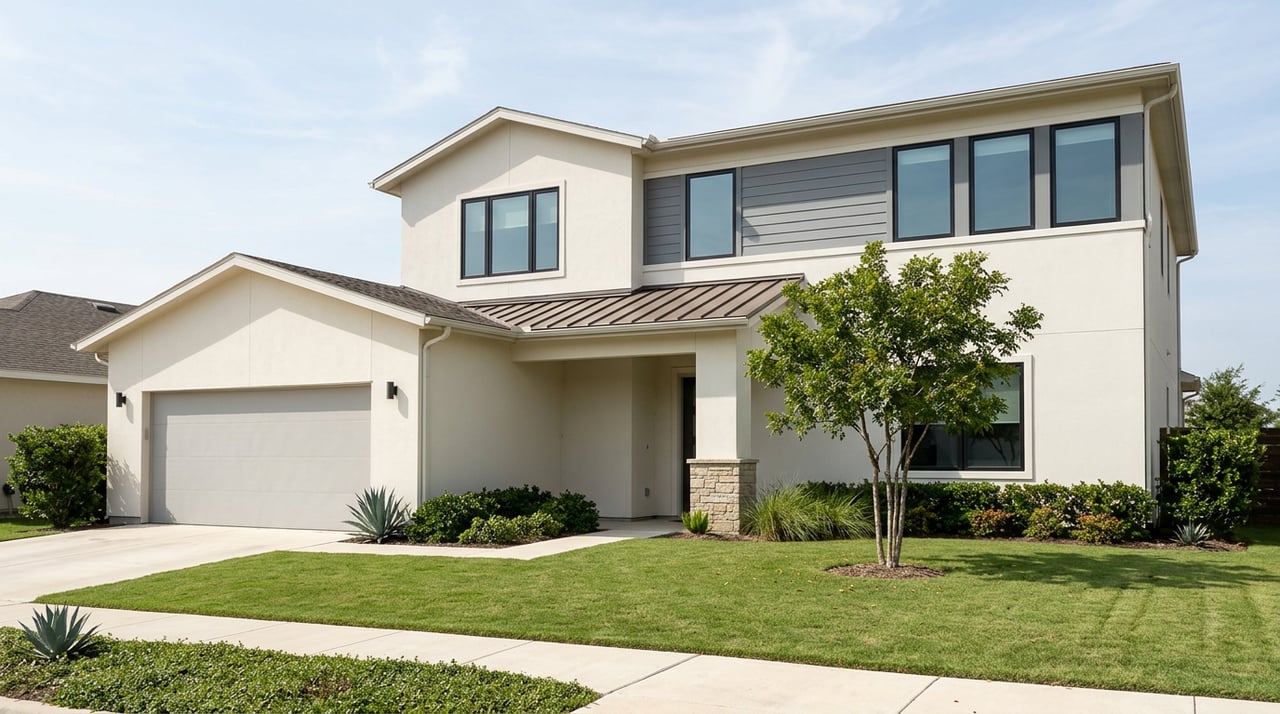
"This is evolutionary. There's so many things that are going to change."
That's Watson Ranch developer Terrence McGrath, describing a 309-acre master plan that is still being written in real time even as crews pour foundations. He's right about the density, the road alignment, the town center. He didn't say anything about the tax bill. Nobody's press release does.
KB Home opened its Sorrel neighborhood at Watson Ranch in May 2026 with homes starting in the $590Ks. That number is real. It's also incomplete, and if you're comparing a new-construction purchase at Watson Ranch against a resale home somewhere else in American Canyon, the gap between those two numbers is exactly where the surprise lives.
The Tool American Canyon Already Used Once
California's property tax math has a well-known ceiling. Proposition 13 caps the base rate at 1% of assessed value and limits annual increases to 2%. That protection is great for existing owners and terrible for a city trying to fund roads, sewers, and parks in a growth area, because the tax base can't keep pace with what new development actually costs to build out.
The workaround, in use statewide since 1982, is the Community Facilities District, better known by the names of the two legislators who wrote the law: Mello-Roos. A city forms a CFD, issues bonds against future tax revenue, and uses the bond proceeds to build the infrastructure up front. Property owners inside the district then repay those bonds through an annual special tax that shows up as its own line item on the county tax bill, separate from the 1% base rate and not subject to its 2% cap.
American Canyon isn't hypothetical about this. In February 2019, landowners in a growth corridor voted to form Community Facilities District No. 2018-1, known as Green Island Road. The following month, the City Council passed Ordinance No. 2019-03, authorizing the special tax that would repay bonds for the Green Island Road Reconstruction and Widening project and fund its ongoing maintenance. The first bond issuance followed in the 2019-20 fiscal year.
That's the mechanism working exactly as designed: a specific growth corridor needed specific infrastructure, and the city used a CFD to pay for it up front by taxing the parcels that would benefit.
Why That Precedent Matters At Watson Ranch
Green Island Road was one corridor. Watson Ranch is a different order of magnitude entirely, a 309-acre specific plan built on the old cement plant site, ultimately slated for somewhere between 1,200 and 1,253 homes, a 20,000-square-foot community center, a Type 1 water tank, an on-site wastewater conveyance system, and a planned hotel. The original plan also called for a 10-acre elementary school site, which the Napa Valley Unified School District later asked to reclassify as parkland given declining district enrollment.
None of that infrastructure builds itself, and none of it comes free through the 1% base rate. If American Canyon reached for a CFD to fund one road, it would be consistent with its own recent history to reach for the same tool to fund water, sewer, and street infrastructure for a project twenty times the size. That doesn't mean every parcel inside Sorrel, Serrano, or D.R. Horton's Harvest at Watson Ranch carries an active special tax. It means the burden is on the buyer to check, because the builder's price sheet has no obligation to answer that question for you.
What The Number Could Actually Cost You
Here's where the math gets concrete. American Canyon's citywide median effective property tax rate currently sits at 1.15%, a figure that reflects the Napa County base levy blended with local school levies and whatever CFD special taxes happen to apply to a given subdivision. In cities with heavy CFD concentration, effective rates in the taxed zones commonly run from 1.5% to 1.7%, well above the 1.1% to 1.3% typical of areas without one.
Apply that spread to a Sorrel home priced at $590,000. At the citywide median of 1.15%, the annual property tax bill runs roughly $6,785, or about $565 a month. At the higher end of the CFD-heavy range, 1.6%, that same home carries roughly $9,440 a year, or about $787 a month. That's a swing of more than $220 a month, over $2,600 a year, on identical square footage, and it's a swing the base sale price never discloses.
To be clear, this is illustrative math built from published rate ranges, not a confirmed figure for any specific Watson Ranch address. The actual number for any given lot depends on whether that parcel sits inside a formed CFD, what the district's rate and method of apportionment says, and how many years remain on the bond. Which is exactly why you check before you write an offer instead of after.
Where To Actually Look
California gives buyers real tools here, and they're worth using in order.
- Request the Natural Hazard Disclosure report. California law requires sellers, including new-home builders, to disclose CFD membership as part of the NHD.
- Ask for the Notice of Special Tax. Under California Civil Code Section 1102.6, a seller with a property inside a CFD has to provide a notice stating the district's name, the current fiscal year's special tax amount, whether it can increase, how many years it will run, and who to call with questions.
- Pull the actual county tax bill or a preliminary title report. CFD assessments appear as a distinct line item, usually labeled with the district's name and number, the same way Green Island Road appears on parcels within its boundary.
- Call the CFD administrator directly if one is listed. They can confirm the bond's maturity date and whether prepayment is an option.
- Ask specifically about stacked districts. Larger master plans sometimes carry more than one CFD, one for roads, one for schools, one for parks, each billed separately.
Napa County sends assessment notices each spring, typically landing in mailboxes by mid-May, and homeowners who believe their assessed value is off can file a formal appeal with the county assessor before November 30, 2026. Neither of those deadlines has anything to do with Mello-Roos specifically, but they're the same calendar a new Watson Ranch buyer will be operating on in year one of ownership, so it's worth knowing they exist.
The Comparison The Flyer Skips
Here's the part that changes how you should shop. CFDs form almost exclusively in developing areas, because the entire point of the mechanism is financing infrastructure that doesn't exist yet. Older, already-built-out sections of American Canyon are far less likely to carry an active special tax simply because the roads, water lines, and parks they need were built decades ago under a different funding structure, if a CFD was ever involved at all.
That means a resale home in an established American Canyon neighborhood and a new-construction home at Watson Ranch aren't just different in age and finish level. They can carry genuinely different effective tax rates, and the gap doesn't show up anywhere in a listing photo. A buyer choosing between the two isn't just weighing granite counters against a fifteen-year-old kitchen. They're weighing a known, capped tax structure against one that may run for another two or three decades on a brand-new subdivision.
That's not an argument against buying new. Watson Ranch is going to be one of the largest residential communities built in Napa County in a generation, with trail access to the Newell Open Space Preserve and a planned town center. It's an argument for pricing the whole picture before you compare it to anything else on the market.
A Few Questions Worth Asking Directly
Does a Mello-Roos tax ever go away? Yes, once the underlying bonds are paid off, typically 20 to 40 years from formation, though some districts continue a smaller charge afterward to fund ongoing maintenance.
Can I pay it off early? Many CFDs allow prepayment of your share of the remaining bond balance. Ask the administrator for a payoff quote if you're planning to hold the property long term.
Is it tax deductible? Generally the bond-repayment portion isn't deductible as property tax on a federal return. A portion tied to ongoing maintenance or services sometimes qualifies. Confirm with a tax professional before assuming either way.
If you're comparing a Watson Ranch price sheet against a resale listing across town, or you just want someone to pull the actual tax status on a specific address before you write an offer, reach out to Shandrika Powell. Solano and Napa County growth corridors like this one are exactly the kind of local detail worth getting right before you sign.